
Historic Water and Sewer Reductions for Apartments and Townhouses
Apartments and townhouses will see a 17.6% cut in their 2026 net utility rates.
For decades, apartments and townhouses have paid the same as single family homes for water and sewer service. Until recently, all utility ratepayers only had a flat rate option, regardless of occupancy or consumption. We have started to address that head on.
a two-to-three minute read
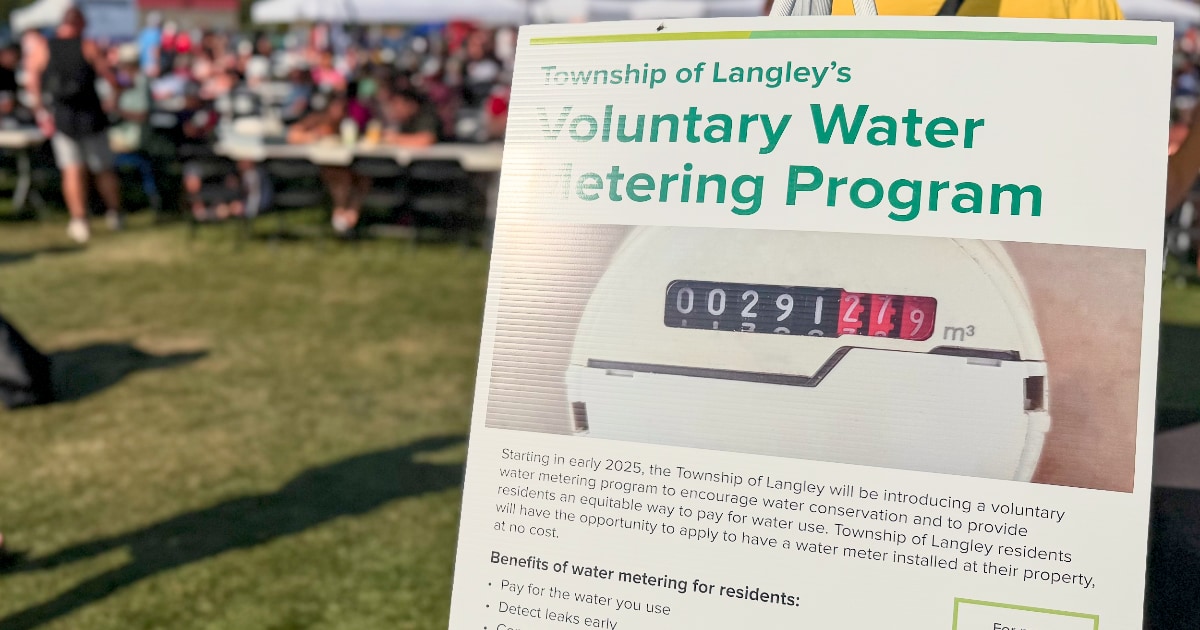
The Township of Langley information booth and display during the 2025 Ribfest at McLeod Athletic Park, answering questions and outlining the benefits of the new voluntary residential water metering program.
KEY TAKEAWAYS
- In 2026, apartments and townhouses on the flat rate system will now pay less than larger single family homes.
- This is an overall cut of 17.6% to water and sewer utilities costs for apartments, even while still on the flat rate system, $272.94 less.
- With a cut in sewer rates of -8.5%, single family homes will also see an overall net reduction as well, -3.4%, $52.73 less in 2026.
Starting in 2026, to address the difference between apartments, we have now implemented significant reductions in water and sewer utility rates for townhouses and single-family homes. Apartments and townhouses will see a combined rate cut of 17.6%. Single family homes on the flat rate system connected to both utilities will see a net cut of 3.4%.
For decades, apartments and townhouses have paid the same flat rate for water and sewer service as single family homes. All paid the same despite the vast differences in consumption, size, configurations or occupancies. We have started to address that head on.
For 2026:
WATER AND SEWER ADJUSTMENTS FOR 2026 |
||||
|---|---|---|---|---|
| SINGLE FAMILY | APARTMENTS & THs | |||
| UTILTY | ADJUSTMENT | 2026 | 2026 | |
| WATER | $13.40 | $779.96 | ($99.34) | $667.22 |
| SEWER | ($66.13) | $716.47 | ($173.60) | $609.00 |
| TOTALS | ($52.73) | $1,496.43 | ($272.94) | $1,276.22 |
| % CHANGE | -3.4% | -17.6% | ||
For apartments and townhouses, these reductions also offset any property tax increases for several years. For those single family homes on the sewer utility, the 2026 adjustment also provides meaningful relief.
These structural reductions are durable affordability measures delivered after almost three years of work to implement these reductions, and to enable future potential, additional savings as well.
First, Council launched a voluntary residential water metering program. Property owners who choose to participate can transition towards paying only for the water they use. This finally aligns our community with many other Metro Vancouver municipalities that have done same, in some cases starting 20 years ago.
Our geography makes utilities more expensive to operate than other, more compact urban municipalities. Metro Vancouver delivers water only to our eastern boundary, while many other municipalities enjoy additional transmission. From 200th Street, the Township must distribute it across a large area. Wastewater must be pumped and transported to regional facilities.
Without more universal water metering, detecting and stopping endless leaks is impossible, costing us all money. Expanded metering allows the Township to find and eliminate that invisible water loss cost. And with metering, overall usage can remain flat even as the community grows, as others like Richmond and Surrey have seen, reducing overall costs even further. And with less water per residents from these measures, there is less wastewater to treat (and pay for) as well.
Second, starting 2025, utility costs were separated from the property tax statement. This enables a transition from a universal, mandated flat rate system to a hybrid that includes metering for those that want it. Beginning in 2027 and 2028, residents will have more billing options, including annual, quarterly, and eventually monthly cycles, just as we take for granted with BC Hydro, Telus and other utilities.
And third, and most importantly for what we have now been able to do in 2026, we successfully unwound the Jericho Phase II Agreement with Metro Vancouver that previously required three payments of $4M dollars each. A total of $12M had been committed, now being returned to ratepayers through lower rates.
Previous Councils agreed to pay these amounts, borne solely by Township ratepayers through large increases that were endorsed in 2018. Through work done by myself and Councilor Steve Ferguson at the regional level this term, we were able to get those back, with that now directly returned to ratepayers.
These reforms correct long standing inequities, help reduce utility operating costs for the long-term, and ensure we use less water per residents by detecting system leaks. We are modernizing our utilities, and getting our rising utilities costs under control.
These efforts and results have delivered real savings in 2026, for affordability, infrastructure, and reduced water usage even as we continue to grow, especially in our western urban areas. With these programs underway, we can finally begin to see the real-world benefit, starting with historic these reductions in utilities costs in 2026, with more progress possible, and to planned, in the years ahead.
documents and council reports
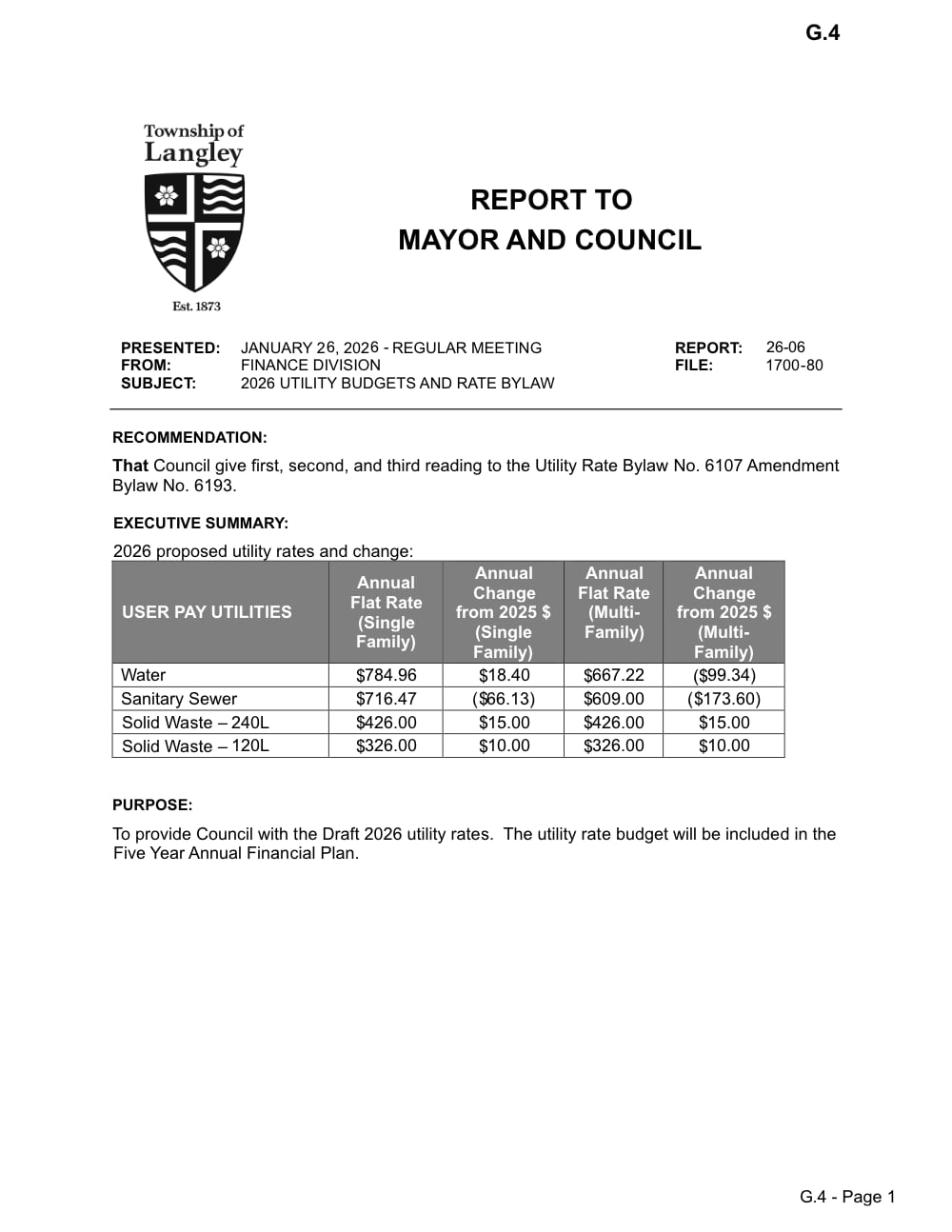
Draft 2026 Utility Budgets and Rate Bylaw
26/01/2026 42 pages
2026 Utilities Draft Budgets Presentation
Presentation 26/01/2026 16 pages
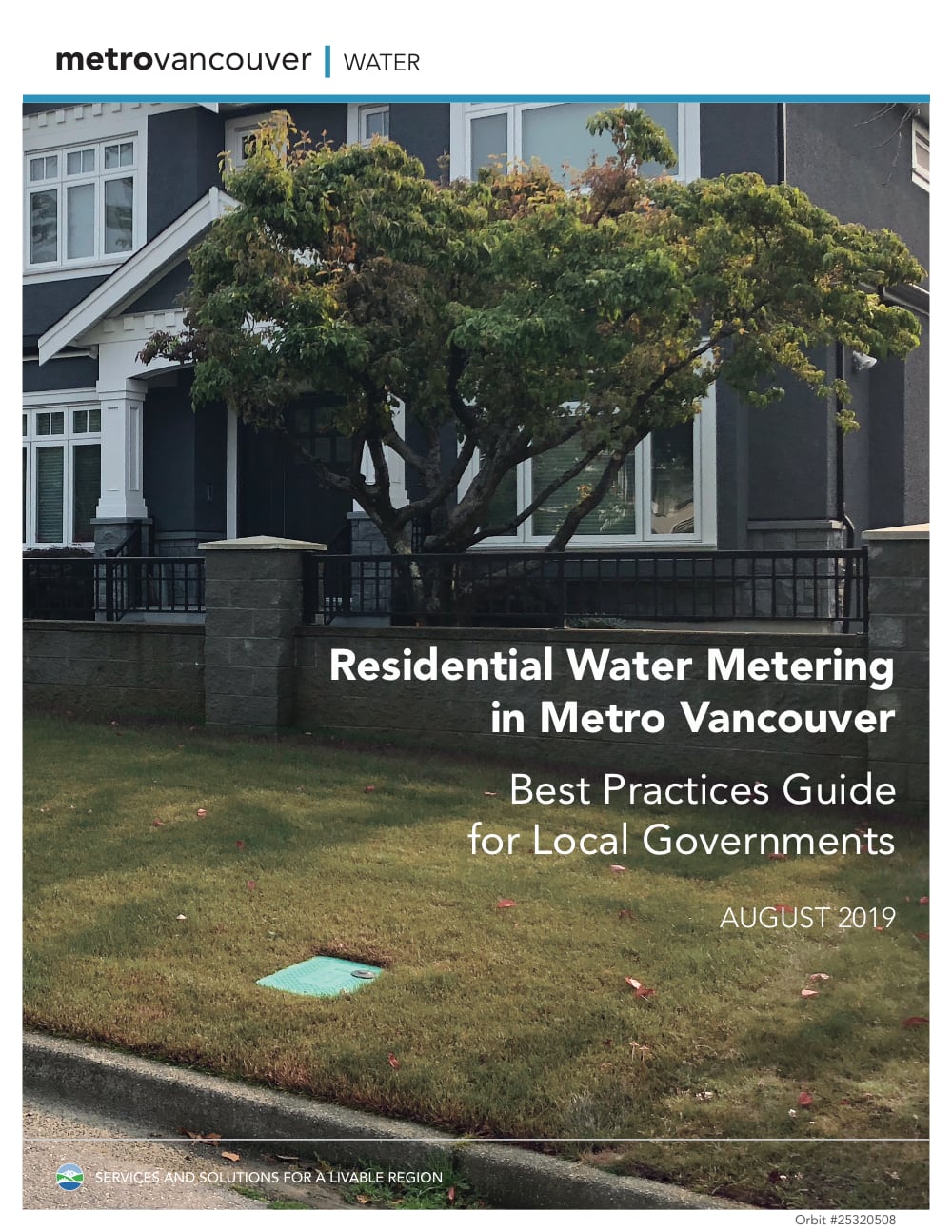
Residential Water Metering in Metro Vancouver
Guide 01/08/2019 52 pages
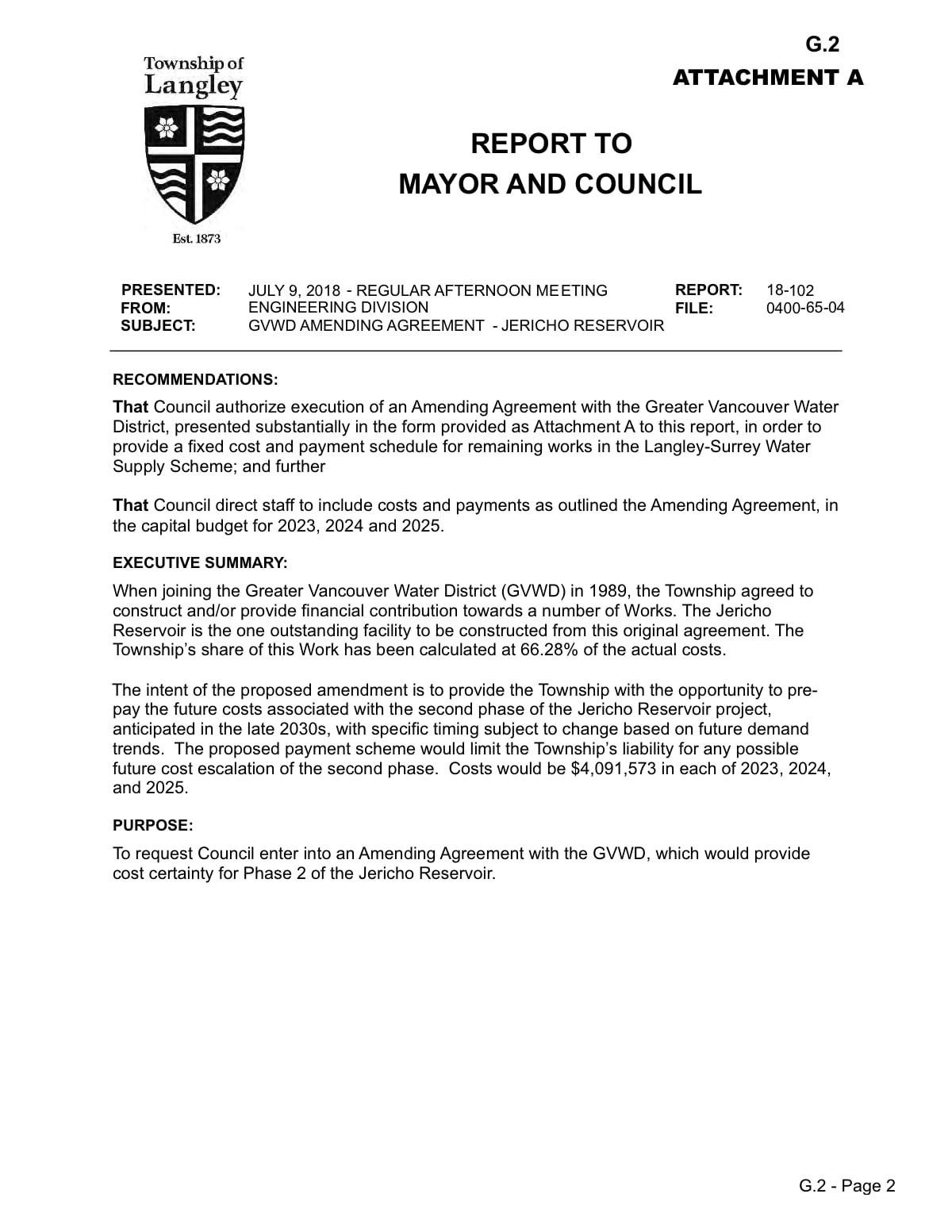
Jericho Reservoir Phase 2 Agreement
09/07/2018 15 pages